
Lume
Gaming addiction recovery app, Co-founder
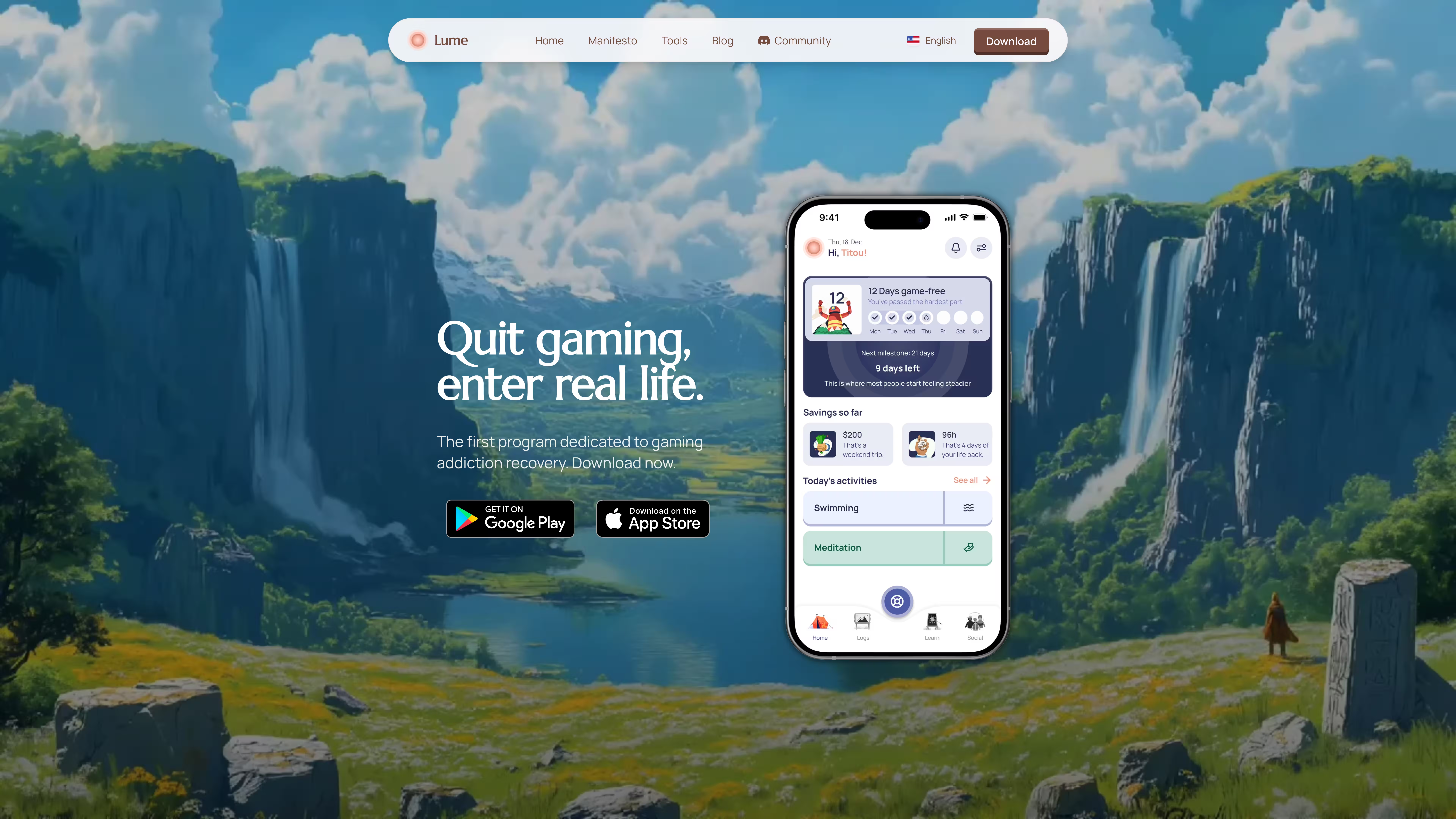
Context
My co-founder and I built Lume between Nov 2025 and Jan 2026 (3 months to launch), at Station F in Paris. We're both ex-gaming addicts, and we wanted to build the thing we wished existed when we were struggling.
I divided my time between designing the UI/UX in Figma, building the app in React Native with Claude Code, conducting research with addiction experts, and driving go-to-market (pitch decks, content, SEO blog posts). We shipped on iOS and Android in 28 languages.
The problem
There are countless habit trackers and recovery tools for standard addictions, but nothing specifically made for gaming addiction.
From a product perspective, this created a unique UX paradox: we needed to provide digital tools for people fighting screen addiction, without making our app their new addiction. We had to design something that offered support and replaced the gaming habit with real-world activities, deliberately avoiding the dark patterns and gamified dopamine loops that our users were trying to escape.
The solution
Instead of another habit tracker, we built an empathetic, intervention-based tool.
We worked with researchers specialized in Internet & Gaming Disorder (IGD) to ground everything in validated science. The milestones, the program structure, the educational content... all evidence-based.
Key features we shipped:
- Emergency "craving" interventions with quick-action buttons and a 24/7 AI companion for high-stress moments
- A learning center born from our conversations with addiction researchers, helping users understand their brain chemistry
- Real-world hobby suggestions based on the user's budget and preferences
- An anonymous community chat with live AI-powered translation so users globally could support each other in their native language
- Sobriety tracking, daily reflections, progress dashboards
To maximize reach, we leveraged AI to natively localize the entire app into 28 languages. Not just translation, we made sure the content sounded natural to local users. We also engineered the live-translation feature in the community chat so people from different countries could talk to each other seamlessly.
Outcomes
We designed, developed, and deployed to both app stores in just 3 months. Got 300 active users globally, largely driven by the SEO benefits of our deep 28-language localization strategy. Received really positive feedback from users who were grateful the tool existed, though the deeply personal nature of addiction made it hard to extract actionable feature feedback from the broader base.
Retrospective
We officially stopped active development in January 2026 (the app is still live). We hit a wall with monetization. Asking people to pay for addiction recovery feels wrong, and users felt that too. The deeply addicted ones don't even know they need help, and the ones who do feel uneasy being charged for it.
We realized building the kind of trusted, engaged community needed for this to work would take years. The motivation was 100% personal for us, but we didn't have the runway.
If I were to build this again, I'd completely invert the process. Start by building the community from day one. Spend months on forums like r/stopgaming, talking to people, listening to their struggles, and figuring out together what actually helps. I also realized a mobile app might not have been the right medium for this problem. Many of these users simply needed to be heard. As a design engineer, I fell into the trap of spending too much time polishing a beautiful product, rather than validating whether there was a profitable business behind it.
Learnings
Validation over building. Before writing a line of code or pushing pixels in Figma, I should have spent thousands of hours in deep conversations on forums and communities. Build the audience first, then build the product for them.
The power of localization. Shipping a high-quality product in 28 languages makes users in smaller markets incredibly grateful, they're rarely catered to. Technically, this also pays massive dividends in SEO and organic traffic.
AI-driven velocity. This project proved we could design, build, and ship a complex, localized, multi-platform product incredibly fast with just two people, by treating AI (Claude Code) as a true extension of our engineering workflow. That execution speed carried into everything we did after.