
Pod
Bluetooth device finder with signal radar, solo build in 2 days, Co-founder
Context
Built at 14x, same setup as our other apps: Claude Code, Xcode, Swift. Shipped in 2 days. Same thesis as Signature Maker and Cura: a proven market full of outdated, poorly designed competitors. I wanted to build something polished and modern.
The problem
People lose their AirPods, earbuds, and Bluetooth devices constantly. Apple's Find My works great for Apple-chipped devices, but it's limited to the Apple ecosystem. Third-party Bluetooth devices (headphones, fitness trackers, keyboards) don't show up there.
The apps that solve this already exist on the App Store, but they all look like they were built in 2017. Cluttered interfaces, confusing flows, aggressive ads. None of them felt premium or trustworthy.
The solution
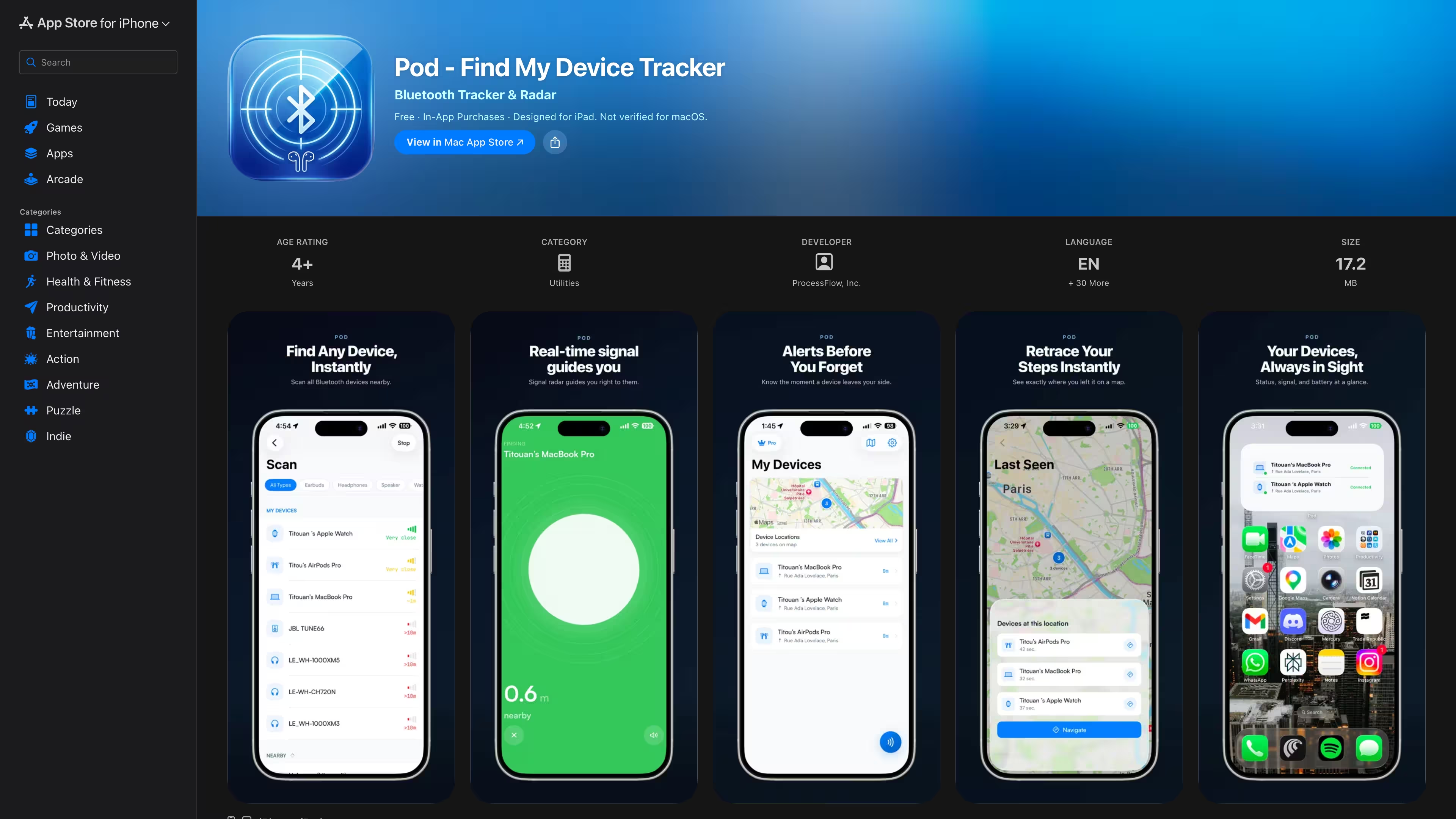
The app scans for any nearby Bluetooth device and provides a real-time signal radar that guides you directly to it with haptic feedback and audio pings.
Key features:
- Real-time Bluetooth signal radar with proximity guidance
- Disconnect alerts when devices leave range
- Last-seen map showing where each device was last connected
- Home screen widgets for device status and battery levels
- Works with any Bluetooth device, not just Apple products
The hardest technical challenge was signal calibration. Unlike Apple's Find My which leverages their proprietary UWB chip for precision, Pod relies purely on Bluetooth RSSI (signal strength). The problem: a human body or a wall between you and the device can cause the signal to drop dramatically, making the distance display fluctuate wildly.
I solved this with a dual-layer smoothing system: a Kalman filter to handle outliers and adapt to signal dynamics, combined with an RSSI trend tracker using linear regression over a sliding window to determine if you're getting "warmer" or "colder." The log-distance path loss model converts signal strength to estimated distance, clamped to realistic ranges. Getting the calibration right (path loss exponent, measurement noise, process noise) was the real challenge, too smooth and the radar feels laggy, too reactive and it jitters.
The result is a radar that genuinely helps you walk toward your device, even in indoor environments with walls and obstacles.
Outcomes
Pod generated about €20 in sales, purely organic. I made no real marketing effort, assuming it would grow like Signature Maker through ASO alone. It didn't.
Retrospective
The market is crowded, but more importantly, most iOS users already have the free "Find My" app that handles their Apple devices natively. Pod's value proposition is finding non-Apple Bluetooth devices, which is a real but narrower use case.
The product works well technically. The radar UX is satisfying and the signal processing genuinely helps locate devices. But the distribution challenge is the same lesson from Cura: if the user doesn't feel urgent pain, they won't search for it in the store.
Learnings
Competing with a free Apple built-in is brutal. Even if your app does more (any Bluetooth device vs. only Apple devices), most users don't know or care about the distinction. They open Find My and it works for their AirPods. You're fighting for the edge case of non-Apple Bluetooth devices.
Signal processing is an underrated UX problem. Raw Bluetooth RSSI is almost useless for distance estimation, it fluctuates 10-20 dBm with every reading. The difference between a useful radar and a frustrating one is entirely in the filtering layer. Kalman filters and trend detection turned noisy data into a smooth, directional experience.