
SnapQuiz
AI study app shipped in 2 weeks, 737 MAU and €59 MRR organically, Co-founder
Context
My co-founder and I built SnapQuiz between February and March 2026, at Station F in Paris. We had just stopped active development on Lume after realizing that building the community needed for monetization would take years we didn't have runway for.
The lesson was clear: validate distribution before building a product. SnapQuiz was born from that realization. We saw existing apps in the study-quiz space generating revenue, which meant paying users already existed. The question wasn't "will people pay for this?" it was "can we reach them?". It was our opportunity to train ourselves to test distribution channels.
We shipped a fully native iOS app (Swift/SwiftUI), Android app (Kotlin/Jetpack Compose), a marketing website in 42 languages, and a TypeScript backend, all in two weeks. Two people, no funding, just an optimized workflow on Claude Code and a distribution hypothesis to test.
The problem
Students take handwritten notes. They know active recall (quizzing themselves) is the most effective way to study. But converting notes into quizzes is tedious, and existing tools require manual question creation or typed input.
The gap wasn't in the science of learning, it was in the friction of applying it. Students wanted to study smarter but didn't have the time or discipline to create their own practice material from what they'd already written.
From a distribution standpoint, this was also an interesting challenge: the target audience (students) lives on TikTok, scrolling study-motivation content daily. The channel existed. We just needed to be in it.
The solution
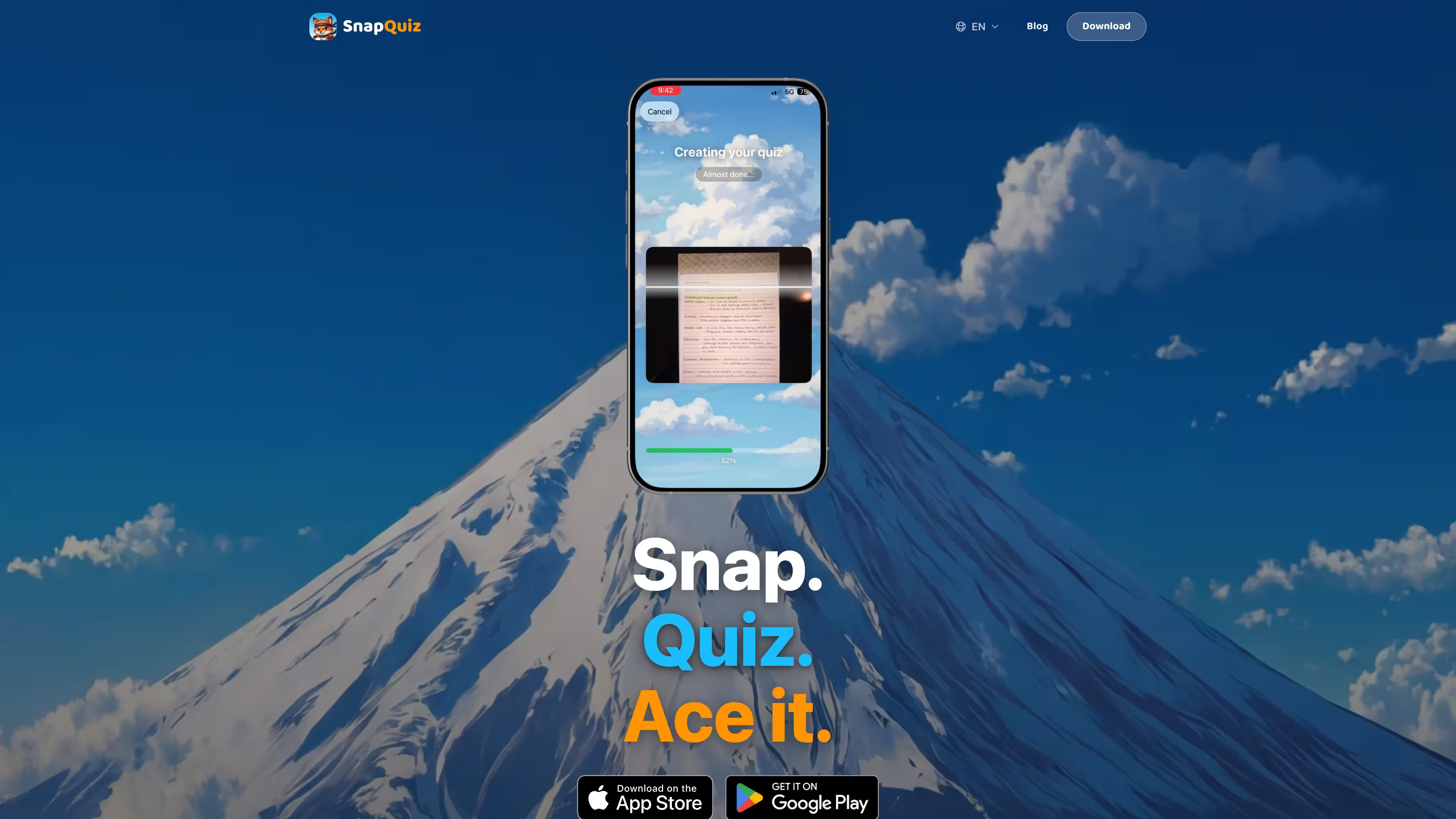
We built an app that turns handwritten notes into AI-generated quizzes with a single photo. Snap your notes, and AI generates a Duolingo-like quiz.
But the product was only half the bet. The other half was distribution.
We planned distribution from day one by contacting influencers for partnerships. In the meantime, we started creating organic content using our internal generator tool and set up our TikTok accounts.
We grew study-motivation accounts organically, creating content that naturally attracted our target audience. Our best-performing video hit 70K views. Combined, our accounts accumulated 58K likes and over 1,500 followers, all organic, zero ad spend.
Outcomes
- 737 monthly active users (last 28 days), grown organically
- iOS + Android + website shipped in 2 weeks by a 2-person team
- 42-language localization driving organic search traffic globally
- 70K views on top-performing TikTok, 58K total likes across accounts
- €59 MRR, proof of willingness to pay without any paid acquisition
Retrospective
Monetization is harder than expected for a utility app in the student market. Students are price-sensitive, and a single-feature tool (even a genuinely useful one) faces conversion headwinds against free alternatives and short attention spans.
We also learned that TikTok accounts in this niche are fragile. Our branded accounts were banned, forcing us to rebuild with persona-based approaches. The channel works, but it requires resilience and diversification.
One concrete issue was budget. Our main competitor grew almost exclusively through paid influencer partnerships. We didn't have the funds for that, so the organic route was significantly harder and slower.
Learnings
Distribution before product. After Lume, we inverted our process. We picked SnapQuiz specifically because paying users already existed in the market. The question was never "will this work?" but "can we reach people cheaply enough?" That framing changed everything about how we prioritized daily actions to tie them to concrete revenue.
AI as a force multiplier, not a shortcut. Claude Code didn't replace product thinking. Two weeks to ship a native dual-platform app with backend, website, and 42-language localization would have been impossible without it. But the hard decisions (what to build, how to distribute, when to stop) remained deeply human.
Build tools for yourself, then for others. Both our internal content generator and ASO tools started as solutions to our own bottlenecks. The best developer tools come from real pain, not hypothetical use cases.